
Winter on the Kohala Coast of the Big Island is magical, with warm sand under your feet, refreshing ocean breezes and the awe-inspiring show of humpback whales offshore. If you’re planning a winter trip to the Big Island, knowing when and where to see these giants will make your visit unforgettable.
This is your guide to Kohala whale watching, with all information and tips you need to make the most of Big Island whale season.
When to Visit the Big Island for Peak Whale Watching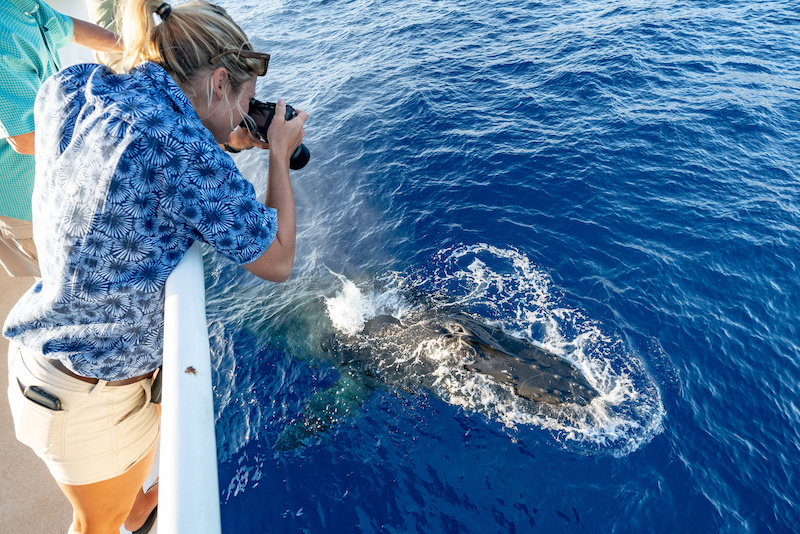
Humpback whales migrate to Hawaii every winter to breed and give birth. On the Big Island, the season typically lasts from late November to April, with whale numbers peaking from January to March. You’ll sometimes spot early visitors in October and occasional stragglers in May, but plan your trip in the heart of winter for the best odds.
The best time of day to spot humpback whales is typically during the early morning or late afternoon just before sunset. Early mornings usually mean soft light and calm water before trade winds pick up, while sunset whale watching gives you incredible golden hour lighting for your photos. However, whales are active throughout the day, so if you catch a mid-morning or afternoon outing, you’ll still have a good chance to catch a glimpse.
Shore Watching or a Boat Tour
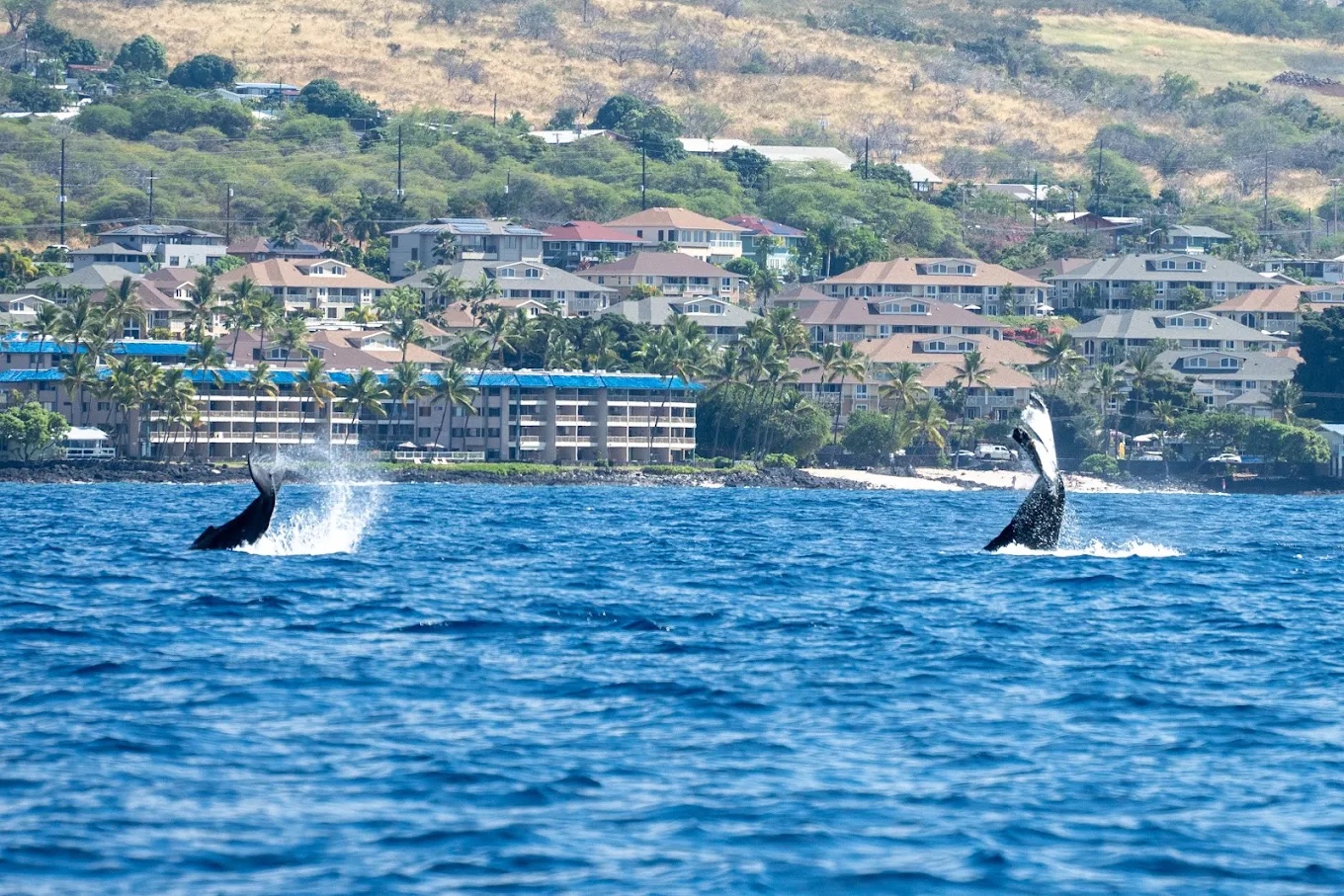 Both shore-based viewing and boat tours offer distinct advantages, and many visitors enjoy doing both during Big Island whale season.
Shore watching is relaxed, budget-friendly and perfect for families or anyone who prefers solid ground. On shore, you can take your time, set up a comfortable spot and observe natural behavior without the motion of a vessel or a strict schedule. If you just want a quiet morning on the beach with the chance of seeing a whale breach on the horizon, shore watching is a great choice.
Boat tours bring you closer to the action while staying within the legal safety distances that protect the whales. Many Kohala Coast tours are led by experienced marine naturalists who explain whale behavior, breeding and calving patterns, and local conservation efforts. If you want an up-close, immersive experience, then a boat tour is what you’re looking for.
Best Shores Spots on the Kohala Coast
Many of the beaches along the Kohala Coast provide excellent land-based whale watching, with these spots at the top of the list:
-
Puako Bay: This is a favorite spot for whale watching, with easy parking and broad views making it a top choice.
-
Kauna’oa and Hapuna Beach: These neighboring white sand beaches offer elevated vantage points and open ocean views where breaches, blows and tail slaps are often seen.
-
Kapa’a Beach Park: This uncrowded beach at the northern tip of the Kohala Coast offers a serene whale watching spot, with great views of Maui and quick access to nearby historical sites like Lapakahi State Historical Park.
-
Puʻukoholā Heiau National Historic Site: The elevation at this historic site provides a great whale watching experience, along with the opportunity to learn about Hawaiian history and culture.
Big Island Whale Watching Safety and Etiquette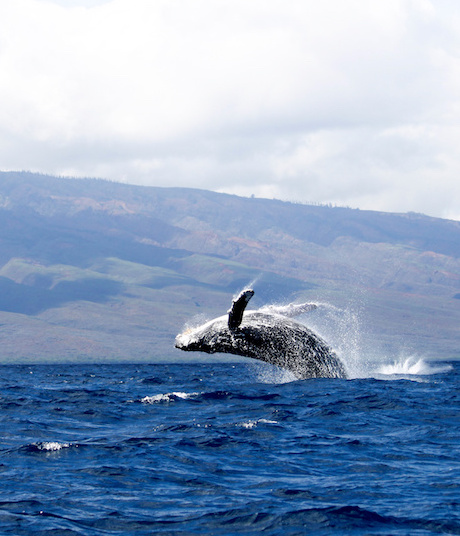
Whales are protected animals, and there are legal and ethical rules to follow when viewing them. Federal regulations require vessels to stay at least 100 yards away from humpback whales in Hawaiian waters, and you should never intentionally approach or harass whales. Responsible boat tours will abide by this “no chase” practice, and if whales choose to come closer on their own, tours will usually put engines in neutral and allow the animals to move freely until they leave.
If you’re on shore, you should avoid swimming out or paddling a kayak toward a whale, or using drones around them. You should keep voices and music low, and avoid crowding sensitive areas like dunes or restoration zones. For families, it helps to explain to kids that whales are protected wildlife (not performers) and that patience and quiet watching are the key to memorable experiences.
Tips and What to Bring Whale Watching
-
If you take a guided tour, choose local operators who follow NOAA and state guidelines, and who emphasize whale welfare and education.
-
Many shore viewing spots are stroller or wheelchair-friendly, but rocky shorelines may be less accessible, so plan accordingly.
-
If you plan to swim while whale watching, look for lifeguarded beaches like Hapuna.
-
Don’t forget to pack the essentials for whale watching:
-
Binoculars—essential for shore watching or boat tours.
-
A camera with zoom lens—great for shore watching.
-
Reef-safe sunscreen, a sun hat and polarized sunglasses—the winter sun is strong on the beach, and reflection off the water intensifies exposure.
-
A light jacket—early mornings and evenings can be breezy.
-
Beach chair or blanket—viewing is more comfortable when you can sit and scan the horizon.
-
Motion sickness medication— recommended for boat tours especially if you’re prone to sea sickness
-
For an unforgettable Big Island whale season experience, with easy access to the best beaches and viewpoints, staying on the Kohala Coast is the ticket. Book one of our Kohala Coast vacation rentals and you’ll have the Big Island’s top whale-watching spots right out of your front door!